
The most remarkable thing about the Klaserie Private Nature Reserve is what you don’t see. Yes, you’ll encounter incredible wildlife and spectacular scenery, but it’s what’s missing that leaves the greatest impression.
You won’t find long queues of safari vehicles gathering around a sighting. You won’t encounter busy roads or the sense that the wilderness is being shared with hundreds of other visitors. And you won’t find a reserve that has been shaped primarily around tourism.
Instead, what you discover is something increasingly rare in modern safari travel: a landscape that still feels governed by nature rather than by people.
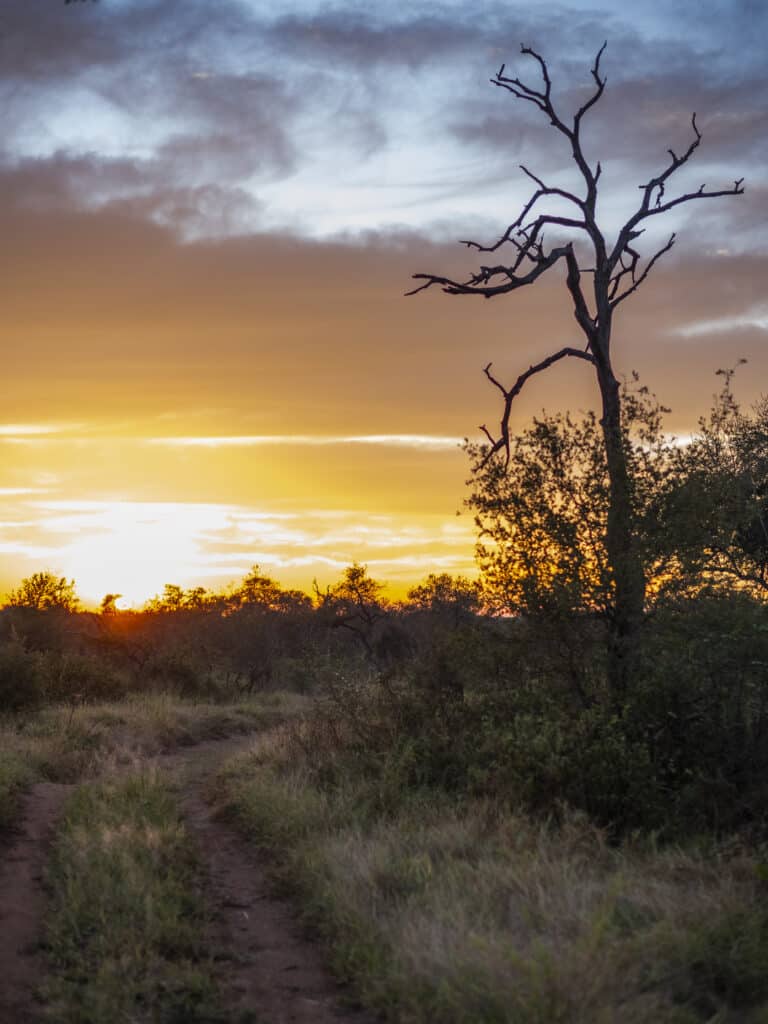
Situated within the Greater Kruger ecosystem, the Klaserie Private Nature Reserve spans more than 60,000 hectares of protected wilderness and forms part of an unfenced conservation area extending across more than two million hectares. Wildlife moves freely between the Klaserie, Kruger National Park and neighbouring private reserves, following ancient migratory routes and natural patterns that have existed long before reserve boundaries were ever drawn on a map.
This freedom of movement is one of the defining characteristics of the area. Elephants move between reserves in search of seasonal food sources. Lions patrol vast territories that ignore property lines. Leopards move through river systems and woodland habitats as they always have. The result is a wilderness that functions as a genuine ecosystem rather than an isolated wildlife sanctuary.
Yet it is not only the scale of the reserve that makes the Klaserie exceptional. It is the philosophy that underpins it.
From its inception, the Klaserie has prioritised conservation over commercial development. The reserve was established in the late 1960s and formally protected in the early 1970s. Landowners combined their properties to create a larger protected wilderness area. More than five decades later, that commitment remains evident in the way the reserve is managed today. Low-density tourism, habitat protection and responsible wildlife management continue to sit at the heart of its approach.
For visitors, this philosophy translates into a very different safari experience.
One of the reserve’s most important game-viewing policies is its strict limitation on vehicles at wildlife sightings. Only two vehicles are permitted at a sighting at any one time, helping to reduce pressure on animals and maintain a more natural viewing environment. It is a simple rule, but one that has a profound impact on the quality of a safari.
Rather than arriving at a crowded scene, guests are often able to spend meaningful time observing wildlife behaviour without distraction. A leopard resting in a marula tree, a lion pride moving through woodland at first light, or a herd of elephants crossing a dry riverbed can be experienced in relative peace. The emphasis shifts away from simply seeing wildlife and towards understanding it.
This sense of space extends far beyond individual sightings.
The Klaserie is characterised by a rich mosaic of habitats, each supporting different species and ecological processes. Ancient leadwood trees, known locally as mondzo, stand as some of the oldest living features in the landscape. These giants provide nesting sites for raptors, shelter for smaller animals and a sense of permanence that defines much of the reserve’s character. Along drainage lines and seasonal rivers, jackalberry trees create dense pockets of riverine vegetation favoured by elephant, nyala and leopard. Marula and knobthorn woodlands dominate large sections of the reserve, while open grasslands provide grazing for plains game and hunting opportunities for predators.
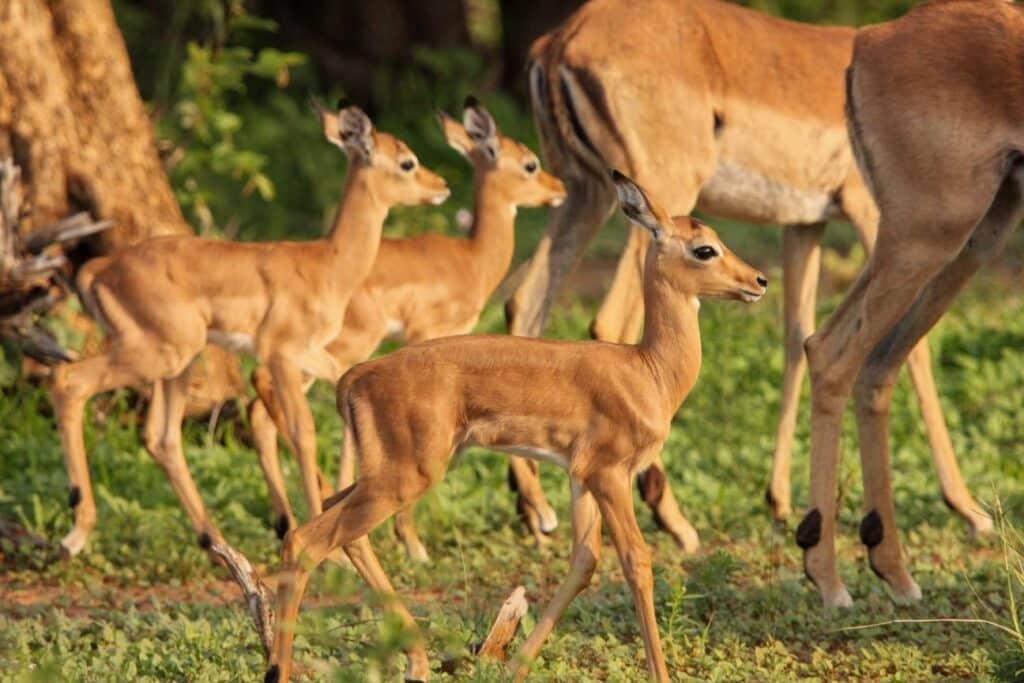
These diverse habitats are one of the reasons wildlife viewing in the Klaserie feels so dynamic. The landscape is constantly changing. A game drive may begin in open savanna where giraffe and zebra feed, move through thick riverine vegetation where a leopard has hidden its kill, and end beside a waterhole where elephants gather during the heat of the afternoon.


Yet the true value of the reserve lies in something less tangible.
The Klaserie has resisted the pressure to become busier, larger and more commercialised. It remains one of the few places within Greater Kruger where silence still plays an important role in the safari experience. There are moments here when the loudest sounds are the calls of hornbills.
For many travellers, particularly those returning to Africa after previous safaris, this becomes the defining memory. Not necessarily a single sighting, but a feeling. The sense of being immersed in a functioning wilderness where nature sets the pace and where there is enough space for genuine discovery.
This is perhaps why the Klaserie is so often described as one of Greater Kruger’s best-kept secrets. While neighbouring reserves may attract greater international recognition, the Klaserie has quietly maintained the qualities that many safari travellers value most: authenticity, privacy and a strong commitment to conservation.
At Tulela Safari Lodge, these are the qualities that shape every guest experience. Set beneath mature indigenous trees on the banks of the seasonal N’tsiri River, the lodge reflects the same values that have defined the reserve for decades. It offers guests access to a wilderness where flexibility, privacy and meaningful wildlife encounters remain possible because the landscape itself has been protected so carefully.
In many ways, Tulela’s greatest asset is not the lodge at all.
It is the privilege of being part of the Klaserie, a reserve that continues to demonstrate what safari can be when conservation, wilderness and thoughtful tourism exist in balance.